24 Hallway Decor Ideas for a Stunning First Impression
Your hallway may be the smallest space in your home, but it sets the tone the moment someone walks in. A few thoughtful details can make it feel brighter, tidier, and more welcoming. Keep that warm welcome going on the other side of the door with these sunny front porch ideas.
These hallway decor ideas show how to make an entry feel polished without filling it with bulky furniture or complicated projects. Inside, you’ll find simple ways to use color, mirrors, lighting, storage, art, and texture, with options for narrow passages and busy family homes. In many homes, the entry also has to handle shoes, coats, keys, and bags, so good design needs to look lovely and work hard. Use the ideas as a starting point, choose details that suit your space, and create a first impression that feels like you. To style the rooms beyond your entry, explore these decorating ideas.
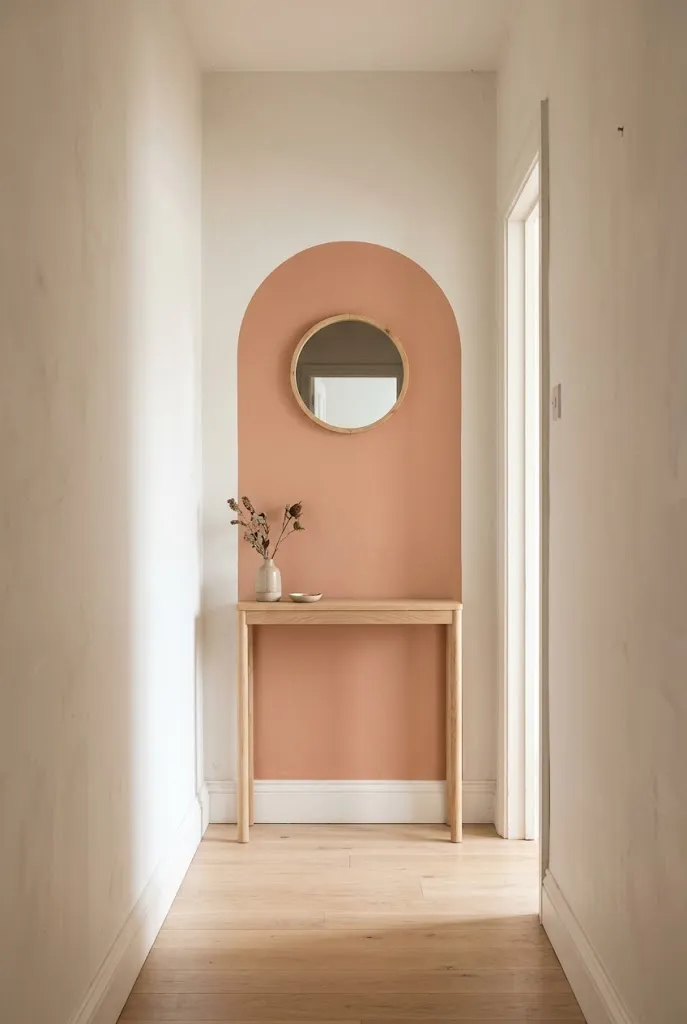
Painted Archway
Among the most adaptable hallway decor ideas, a painted arch gives a plain wall a focal point without taking up floor space. Choose muted terracotta, dusty rose, or warm olive, then mark a wide arch behind a slim console or bench. Matte paint keeps the shape soft and refined.
Before painting, use painter’s tape and a level to mark the sides, then sketch the curve with a pencil and string. Keep the color on one wall so a narrow corridor still feels open. A shallow shelf, small mirror, or single framed print can sit inside the arch; leave walking space clear.
Layered Hallway Runner
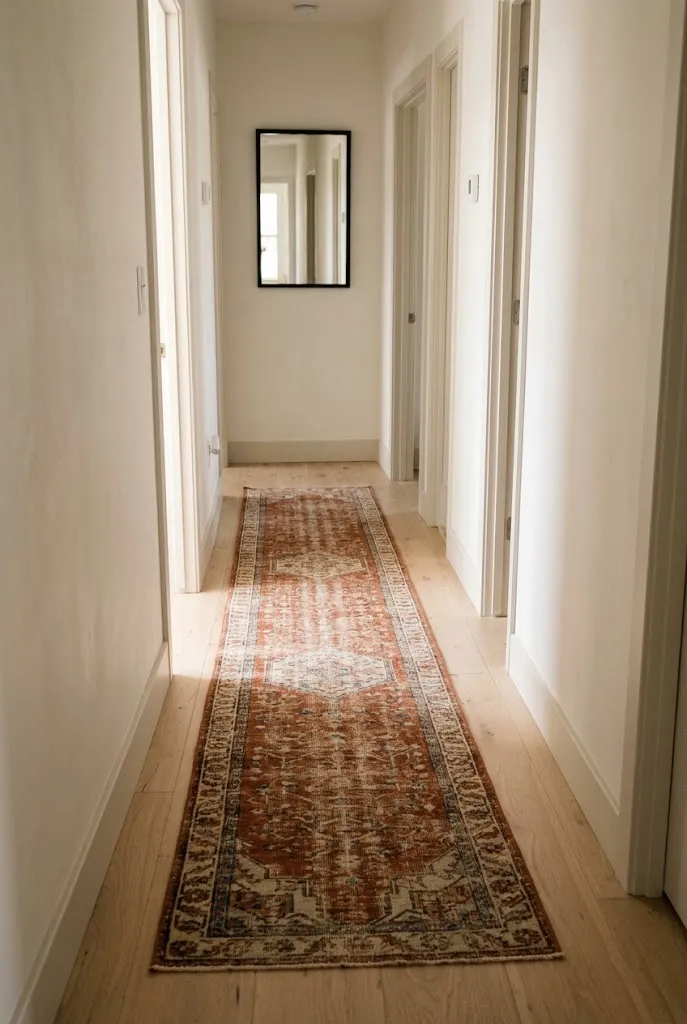
- Let a patterned runner bring color and definition to a plain hallway floor.
- Choose a low-pile weave that doors can clear and shoes will not easily catch.
- Leave a few inches of flooring visible along both sides for a balanced look.
- Add a nonslip rug pad to help keep the runner in place.
A runner can make a long passage feel more connected to the rooms around it. Repeat one color from nearby art or cushions so the pattern feels intentional. Measure the hallway before buying, including the space beneath open doors, and choose a washable material if the entry gets muddy.
Gallery Wall
Quick Tip: Trace each frame onto paper and tape the templates to the wall before hanging anything. Keep a consistent gap of about two to three inches between frames for a tidy arrangement.
A thoughtfully spaced gallery wall turns an empty stretch into a personal focal point. Mix family photos with simple line art or botanical prints, but repeat frame colors to keep the display cohesive. Hang the center of the arrangement near eye level, and keep the lowest frame high enough to avoid bumps.
Slim Console Table
BEFORE: Keys, mail, and small bags pile up wherever there is space. The entry feels busy, even when the rest of the hallway is tidy.
AFTER: A narrow console creates one landing spot for everyday essentials. A bowl and small tray keep the surface organized while leaving the walkway open.
A slim console gives loose entryway items a home without crowding the passage. Measure the available depth before choosing a table, especially if the hallway is narrow. Keep only daily essentials on top, and use a basket underneath for shoes or reusable shopping bags.
Wall Hook Storage
- Measure the wall and mark hook positions with a level, spacing them far enough apart for coats.
- Attach hooks to wall studs when possible, or use anchors rated for the expected weight.
- Add a shallow shelf above for hats, then place a basket below for scarves or gloves.
A clear floor makes a hallway feel easier to walk through, especially when several people share the entry. Assign each person a hook or a small section of the rail. Keep heavier bags on sturdy hooks and leave the lowest ones for children to reach.
Layered Hallway Lighting
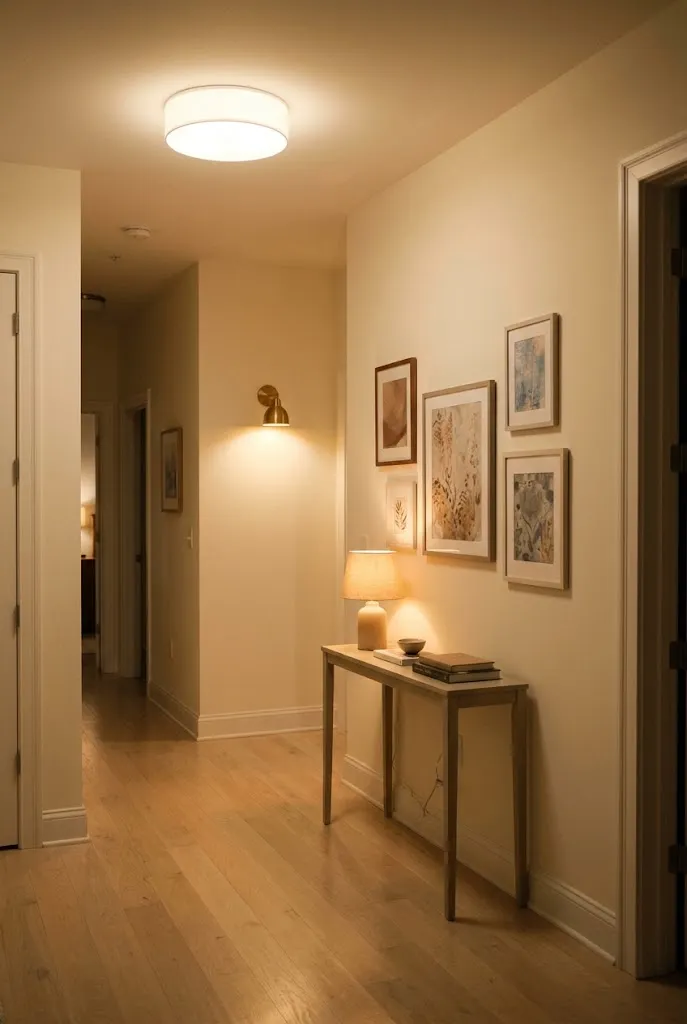
| Lighting choice | What it does | Best use |
| Ceiling light only | Brightens the whole passage | General visibility |
| Ceiling light and sconces | Adds softer light along the walls | Long or windowless halls |
| Ceiling light and console lamp | Creates a warm pool of light | Hallways with a table |
Layered lighting helps a hallway feel welcoming after dark and reduces the harsh effect of a single bright fixture. Choose bulbs with a similar warm color temperature so the light feels consistent. Check that sconces do not stick out too far into a narrow walking path.
Round Statement Mirror
DO
- Center a round mirror above a console or bench to create a clear focal point.
- Choose a frame finish that repeats nearby hardware or light fixtures.
- Check what the mirror reflects, such as a window or a tidy part of the home.
DON’T
- Hang it where the front door could strike it.
- Use a mirror so small it looks lost on a wide wall.
- Place it opposite clutter you would rather not draw attention to.
A mirror bounces light and gives a narrow passage more visual depth. Before drilling, hold a paper template against the wall and check its position from the doorway. Keep the bottom edge high enough to clear objects on the console, and secure heavier mirrors with suitable wall fixings.
Narrow Floating Shelves
Cost: Low to moderate, depending on shelf material
Time: About one afternoon
Skill Level: Beginner with basic tools
Best For: Narrow walls and small entryways
For hallway decor ideas that need to work in a tight space, narrow floating shelves add display room without bulky furniture. Keep each shelf shallow enough to protect the walking path, and use it for a few lightweight items such as a small print or catchall dish. Leave space between objects so the wall still feels open.
Potted Plant Corner
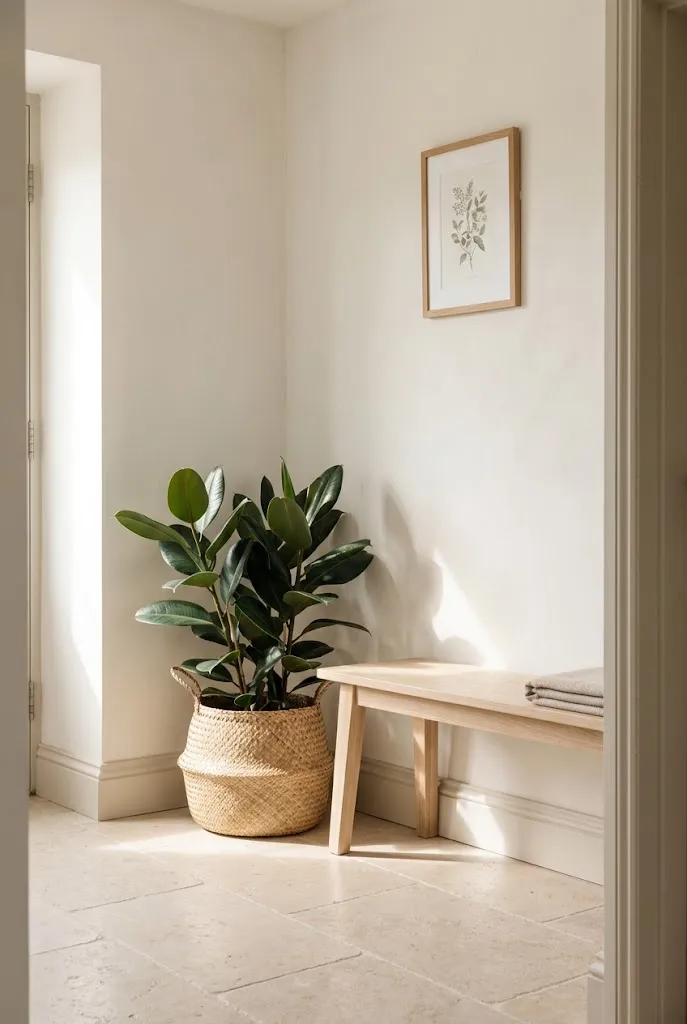
A single leafy plant can soften the hard lines of a hallway corner. Choose a variety that suits the available light, then set it in a stable pot with a waterproof saucer to protect the floor. If the passage is narrow, use a compact plant on a stand instead of a wide floor basket.
Keep leaves clear of door swings and walking paths, especially in a busy entry. For a darker hallway, consider a low-light-tolerant plant or a realistic artificial one with natural-looking foliage. A simple woven basket can hide the nursery pot and tie the greenery into other natural textures nearby.
Bench With Baskets
- Give shoes a place to land with a compact bench and baskets underneath.
- Pick baskets that slide easily beneath the seat and are large enough for daily footwear.
- Add a washable cushion for comfort, choosing a color that connects with nearby decor.
- Leave enough room to walk past the bench without brushing against it.
A bench makes putting on shoes easier while giving the entry a more settled look. Measure the hallway and door clearance before buying, then check the seat height for comfortable use. Label baskets or assign one to each family member to keep shoes from becoming a mixed-up pile.
Bold Ceiling Paint
Quick Tip: Test your ceiling color on a large sample first, viewing it in both daylight and evening light. Keep the walls lighter to maintain a sense of openness.
A colored ceiling draws the eye upward and gives a plain corridor a distinct design detail. Deep blue, muted green, or warm clay can work well when the hallway has enough light. Use a washable matte finish, and repeat the ceiling shade in one small accessory for a connected look.
Patterned Wallpaper
BEFORE: Plain walls can make a hallway feel unfinished, especially when there is little room for furniture. The long stretch may look even longer without a focal detail.
AFTER: A patterned feature wall adds color and gives the eye a place to pause. Smaller prints feel gentle, while larger motifs create a stronger statement.
Choose a wallpaper design that suits the hallway’s scale and lighting. A small repeating pattern can add interest without dominating a tight passage, while a bolder print works well on one short wall. Order a sample and view it at different times of day before papering the full surface.
Bench With Baskets
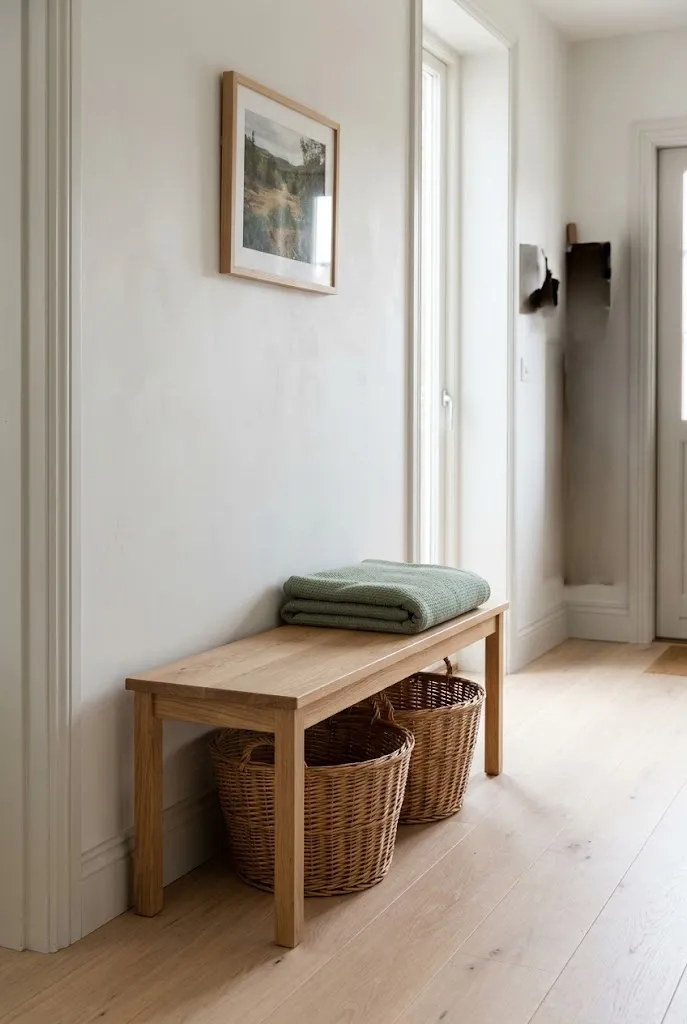
- Give shoes a place to land with a compact bench and baskets underneath.
- Pick baskets that slide easily beneath the seat and are large enough for daily footwear.
- Add a washable cushion for comfort, choosing a color that connects with nearby decor.
- Leave enough room to walk past the bench without brushing against it.
A bench makes putting on shoes easier while giving the entry a more settled look. Measure the hallway and door clearance before buying, then check the seat height for comfortable use. Label baskets or assign one to each family member to keep shoes from becoming a mixed-up pile.
Bold Ceiling Paint
Quick Tip: Test your ceiling color on a large sample first, viewing it in both daylight and evening light. Keep the walls lighter to maintain a sense of openness.
A colored ceiling draws the eye upward and gives a plain corridor a distinct design detail. Deep blue, muted green, or warm clay can work well when the hallway has enough light. Use a washable matte finish, and repeat the ceiling shade in one small accessory for a connected look.
Patterned Wallpaper
BEFORE: Plain walls can make a hallway feel unfinished, especially when there is little room for furniture. The long stretch may look even longer without a focal detail.
AFTER: A patterned feature wall adds color and gives the eye a place to pause. Smaller prints feel gentle, while larger motifs create a stronger statement.
Choose a wallpaper design that suits the hallway’s scale and lighting. A small repeating pattern can add interest without dominating a tight passage, while a bolder print works well on one short wall. Order a sample and view it at different times of day before papering the full surface.
Checkerboard Floor
- Measure the hallway and note door swings before choosing a tile pattern.
- Pick a small checkerboard scale for a narrow passage, using soft contrast to keep the floor calm.
- Order samples and view them beside your wall color and flooring in natural light.
- Choose a slip-resistant finish suited to the entry’s foot traffic.
A checkerboard floor creates a strong foundation for simple walls and understated furnishings. If replacing tile is outside your budget, try a washable patterned runner for a similar graphic effect. Keep the rest of the decor restrained so the floor remains the main feature rather than competing with several bold patterns.
Vintage Coat Rack
| Feature | Freestanding rack | Wall-mounted rack |
| Floor space | Uses a small footprint | Keeps the floor clear |
| Installation | No wall drilling needed | Requires secure mounting |
| Best location | Wider entry corners | Narrow hallways |
| Style effect | Adds a furniture accent | Creates a simple, tidy line |
A vintage rack brings useful storage and a little character to the entry. Check that it stands steadily and has enough hooks for everyday coats without becoming overloaded. In a narrow corridor, a wall-mounted version can preserve floor space while still giving bags and jackets a designated place.
Sculptural Wall Sconces
DO
- Place sconces where they illuminate art or soften a dark hallway.
- Choose a shade that directs light comfortably away from eye level.
- Match the finish to nearby door handles or frame details.
DON’T
- Mount fixtures where they narrow the walking path.
- Use bulbs that create harsh glare on glossy walls.
- Forget to check whether the wiring and installation need an electrician.
Sculptural sconces add shape to the wall even when the lights are off. For a balanced arrangement, mark fixture positions with paper templates and view them from both ends of the hall. Select warm bulbs for a welcoming glow, and check the fixture projection before installing it in a tight passage.
Two-Tone Walls
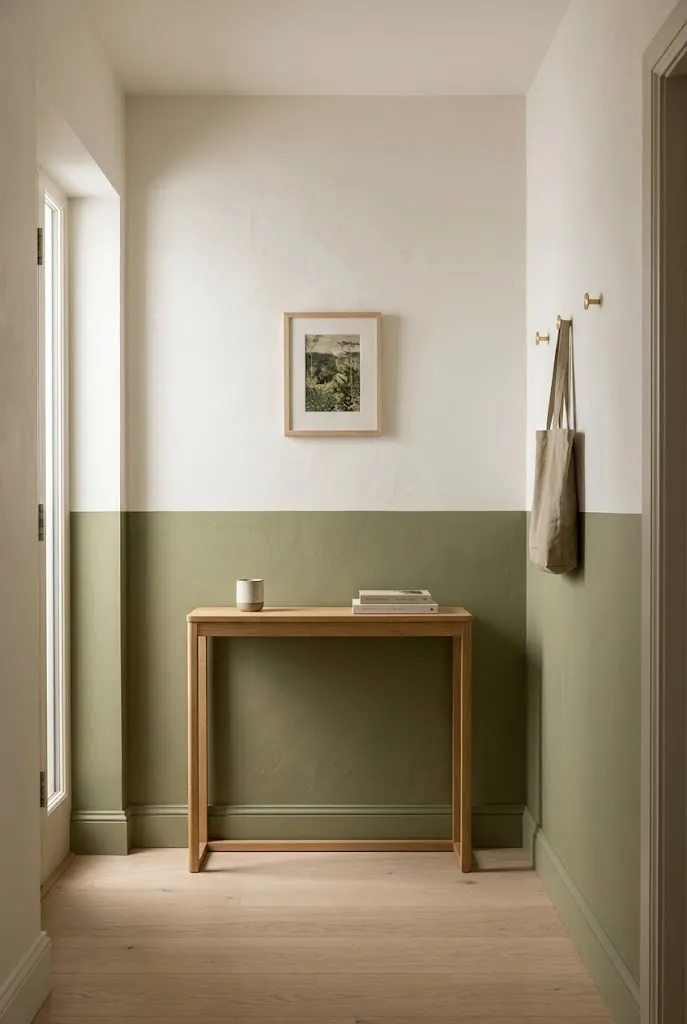
Cost: Low to moderate
Time: One weekend, including prep and drying
Skill Level: Beginner with painter’s tape
Best For: Plain walls and high-traffic hallways
A two-tone wall adds color while keeping the upper part of the hallway light. Choose a lower shade that connects with nearby rooms, then use a level to mark the dividing line before taping. A durable, washable finish below the line helps handle scuffs from bags, shoes, and busy family routines.
Picture Ledge Display
A picture ledge makes it easy to refresh hallway art without filling the wall with nail holes. Choose a ledge with a front lip so frames stay secure, then layer pieces from largest at the back to smallest in front. Keep the colors related, but vary frame sizes for a collected look.
Leave a little breathing room at each end instead of packing the shelf from wall to wall. In a busy passage, hang the ledge high enough to avoid shoulder bumps and keep breakable objects away from the edge. A few frames and one small accent create a neat display that is simple to update.
Staircase Gallery
- Make paper templates for each frame and tape them along the stair angle before hanging.
- Keep the gaps between frames consistent so the arrangement feels connected.
- Mix photographs and artwork, repeating one or two frame finishes for cohesion.
- Use secure fixings suited to your wall type, especially for heavier frames.
A staircase gallery uses an often-empty wall to bring personality into the hallway. Start with the largest frame near the center, then build the arrangement upward to follow the stair line. Step back from both the top and bottom landings to check spacing before making permanent holes.
Beadboard Paneling
Cost: Moderate, depending on panel material
Time: One weekend for a small hallway
Skill Level: Intermediate
Best For: Adding texture and protecting lower walls
Beadboard brings subtle texture to a plain corridor and helps define the lower wall as a durable, finished surface. Paint it a soft white for a classic look or a muted color for more contrast. Measure carefully around door trim and outlets, and use a washable finish where bags and shoes may brush the wall.
Painted Interior Doors
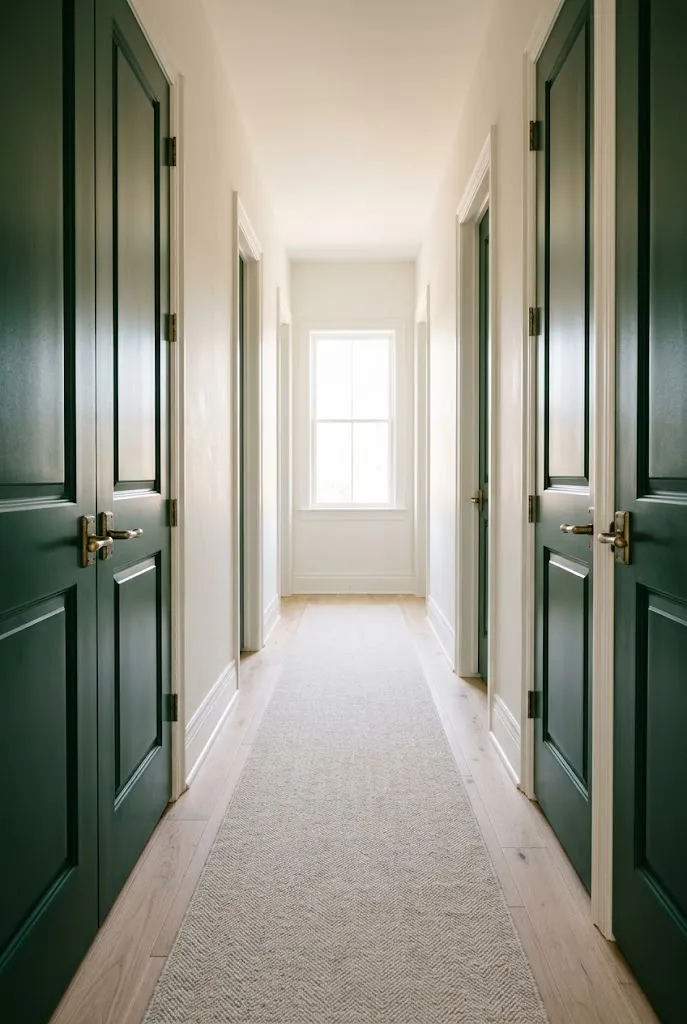
A painted door can add color to a hallway without covering a large wall. Choose one shade for all the doors to create a neat rhythm, or highlight a single door as a focal point. Deep green, charcoal, or muted blue can look striking against pale walls, especially with simple hardware.
Clean and lightly sand the doors before painting so the finish adheres well. Use painter’s tape around hinges and handles, and allow each coat to dry fully before closing the door. A satin or semi-gloss paint is easier to wipe clean than flat paint, which helps in a frequently used passage.
Umbrella Stand
- Choose a narrow stand with a drip tray to protect the floor.
- Place it near the entrance but outside the door’s swing.
- Store only a few umbrellas so they dry and are easy to grab.
- Match the stand’s finish to nearby hooks, handles, or lighting.
An umbrella stand keeps wet-weather gear from leaning against walls or dripping across the hallway. For a small entry, pick a compact design with ventilation and a removable tray that is easy to empty. Let umbrellas dry before storing them for a long time to help prevent musty smells.
Ceiling Medallion
Cost: Low to moderate
Time: A few hours, including painting
Skill Level: Beginner to intermediate
Best For: Hallways with a central ceiling fixture
A ceiling medallion gives a plain overhead space a finished detail and draws attention to the light fixture. Choose a size that leaves plenty of ceiling visible around it, especially in a narrow hall. Paint the medallion to match the ceiling for subtle texture or use a gentle contrast for added definition.
Hidden Shoe Cabinet
A slim shoe cabinet can keep everyday footwear out of sight and give the hallway a cleaner profile. Choose a depth that suits your passage, and check that cabinet doors can open without blocking traffic. A light finish or wall-mounted style can help a small entry feel less crowded.
Add baskets or labeled compartments inside to separate shoes by person or season. Keep a small tray nearby for the pair worn most often, and store occasional footwear elsewhere. Check the cabinet’s ventilation and weight limit before filling it; closed storage looks tidy, but damp shoes need to dry first.
Seasonal Entry Styling
- Change a few small accents, such as a vase, print, or cushion, to reflect the season.
- Keep the main furniture and wall colors neutral so seasonal pieces are easy to swap.
- Use sturdy branches or dried stems that will not shed heavily in a busy passage.
- Store off-season decor together so the next refresh takes only a few minutes.
A small seasonal update keeps the entry feeling fresh without turning it into a full decorating project. Limit changes to the console and one nearby detail, such as a wreath or runner. Keep decorations clear of doors and walkways, and avoid fragile pieces where coats or bags may bump them.
Conclusion
A welcoming hallway does not depend on a large budget or a big renovation. Small choices, such as a useful runner, warm lighting, a mirror, or a place for everyday items, can make the entry feel more organized and inviting. Let these hallway decor ideas help you choose one change that fits your home and routine. Start with the spot that feels least finished, then add details gradually so the space stays practical. Save this article on Pinterest for your next refresh, try a favorite idea, and share it with someone planning an entryway update. A thoughtful first impression can begin right at your front door. Keep the organized feeling going with these ideas for a stylish, organized laundry room, and extend the welcome outdoors with these screened in porch ideas for a cozy escape.
To keep that first impression clutter-free, these drop zone ideas can turn your hallway entry into a stylish spot for keys, bags, and shoes.
3 Comments