23 Ways to Decorate Around a TV for a Beautiful Living Room
A television can anchor a living room, but its dark screen may feel out of place beside your favorite decor.
These ideas show how to decorate around a tv while keeping the space comfortable and practical.
Explore ways to balance the screen with artwork, shelves, plants, lighting, and a well-styled media console. The ideas suit different room sizes and styles, whether your TV hangs above a fireplace or sits on a low cabinet. You will also find practical reminders about cable placement, glare, ventilation, and keeping electronics accessible. Before rearranging the wall, consider the sofa’s viewing angle and measure the available space. A few thoughtful changes can help the television feel connected to the room instead of becoming its only focal point. When you are ready to style the rest of your home, explore these more home decor ideas.
Balanced Console Styling
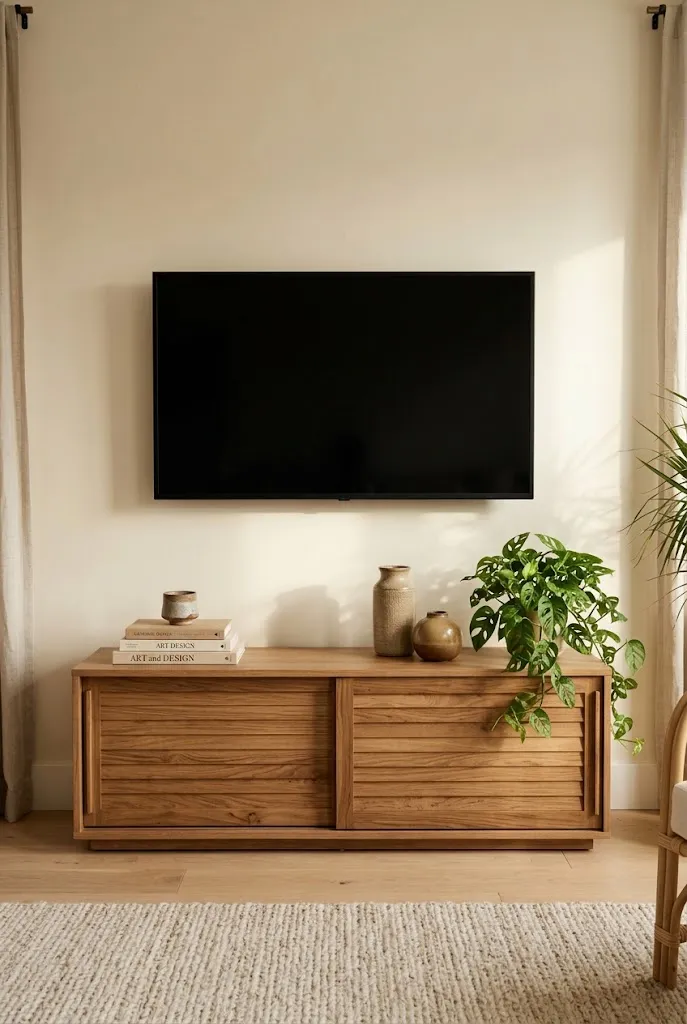
A well-styled console helps the television feel connected to the rest of the room. Place a few objects of different heights beneath the screen, such as a low stack of books, a rounded vase, and a small plant. Leave open space so the surface stays practical.
For anyone wondering how to decorate around a tv, start by balancing the screen’s dark rectangle with lighter textures below it. Keep decor away from vents and leave room for remotes or devices. A simple arrangement looks intentional without competing with what is on screen.
Offset Gallery Wall

- Give the screen breathing room. Start the frames a few inches away from the television.
- Mix two or three frame finishes for a collected look.
- Balance larger art with smaller prints around the outer edges.
- Use paper templates to test the layout before hanging anything.
- Keep the arrangement visually heavier on the side opposite nearby furniture.
A gallery wall softens the TV’s hard edges and makes it feel like part of a larger display. Repeat colors from the room in the artwork, then keep the frame spacing consistent. Paper templates help you adjust the layout without adding unnecessary holes.
Slim Floating Shelves
Quick Tip:
Measure the television and mark shelf positions before installing hardware. Keep shelves shallow and secure them with anchors suited to the wall type.
Floating shelves add useful display space without the bulk of a tall cabinet. Style them with a few low-profile objects, then leave room for airflow around electronics. If the TV sits above a console, use only one shelf on each side to avoid making the wall feel crowded.
Wood Slat Feature
BEFORE: A blank wall can make a television feel like an isolated dark rectangle. The area beneath it may also look unfinished.
AFTER: A wood slat panel gives the screen a defined backdrop and adds warmth behind the console.
Use a panel that is slightly wider than the television so the screen remains the main focal point. Check wall studs and cable routes before mounting anything. A narrower panel can create the same visual anchor while using less material and keeping the rest of the wall light.
Frame The Screen
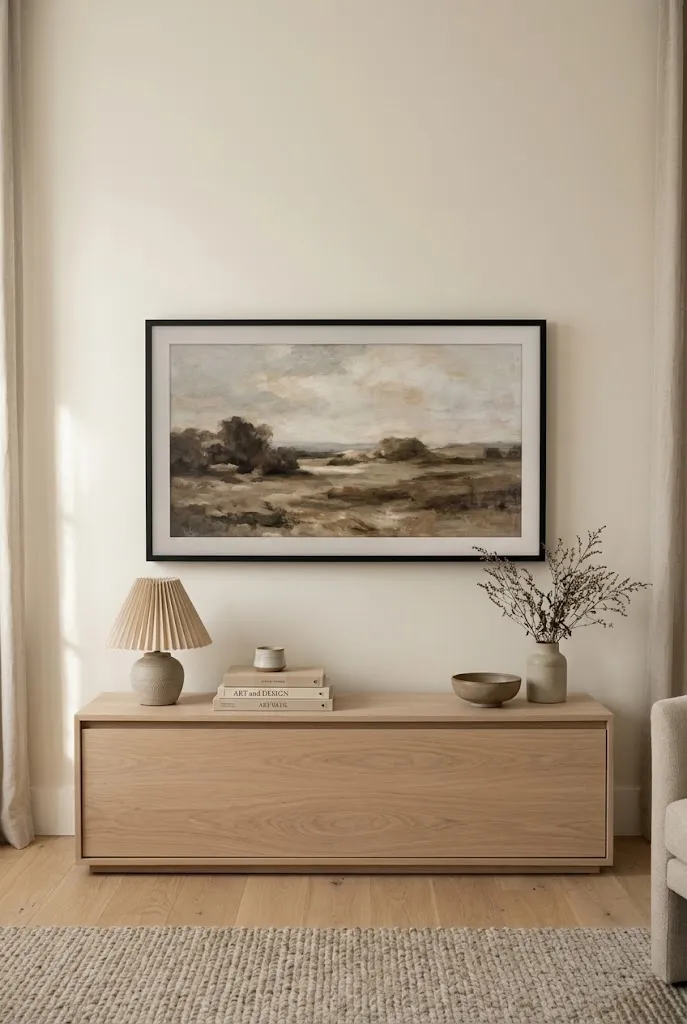
- Check whether your TV supports art mode. This feature can display artwork when the screen is idle.
- Choose a frame or bezel designed for your television model.
- Select artwork with colors that suit the room.
- Adjust brightness so the screen does not overpower nearby decor.
A frame can help a television blend into an art-focused room, especially when the screen is off. Confirm compatibility before ordering a bezel, since frame sizes vary by model. Choose a simple image with muted tones for a display that feels calm from across the room.
Matching Wall Sconces
| Detail | Option A: Plug-In Sconces | Option B: Hardwired Sconces |
| Installation | Hang and plug into an outlet | Requires electrical installation |
| Cable visibility | Cords may need concealing | Wiring stays inside the wall |
| Flexibility | Easy to reposition | Best for a permanent layout |
| Best for | Renters or quick updates | Remodels or long-term plans |
Sconces bring light to the TV wall and create balance when placed on both sides of the screen. Choose dimmable bulbs to reduce glare during viewing. Keep fixtures far enough from the television, and use a licensed electrician for new hardwired connections.
Textured Wallpaper
DO:
- Choose a low-contrast pattern that will not compete with the screen.
- Test a sample beside the TV before covering the wall.
- Coordinate the wallpaper tone with the sofa and flooring.
- Use removable paper if you rent and the wall allows it.
DON’T:
- Choose a busy print that distracts during viewing.
- Apply wallpaper before checking the wall’s condition.
- Use strong adhesives on delicate paint without testing first.
- Cover access panels or cable outlets.
Textured wallpaper gives the TV wall depth while keeping the screen as the focal point. A quiet pattern works best in a room with colorful cushions or artwork. If the television is large, extend the finish across the full wall to make the visual transition feel intentional.
Corner Plant Styling
Best For: Softening one end of a wide TV wall
Plant Choices: Rubber plant, fiddle-leaf fig, or faux olive tree
Placement: Beside the console, outside the viewing path
Care Note: Match the plant to the room’s natural light
A taller plant brings a natural shape beside the screen and balances the hard lines of the television and cabinet. Choose a plant size that suits the ceiling height, then place it where leaves will not block the view. A woven basket can hide the nursery pot and add texture.
Low Profile Media Cabinet
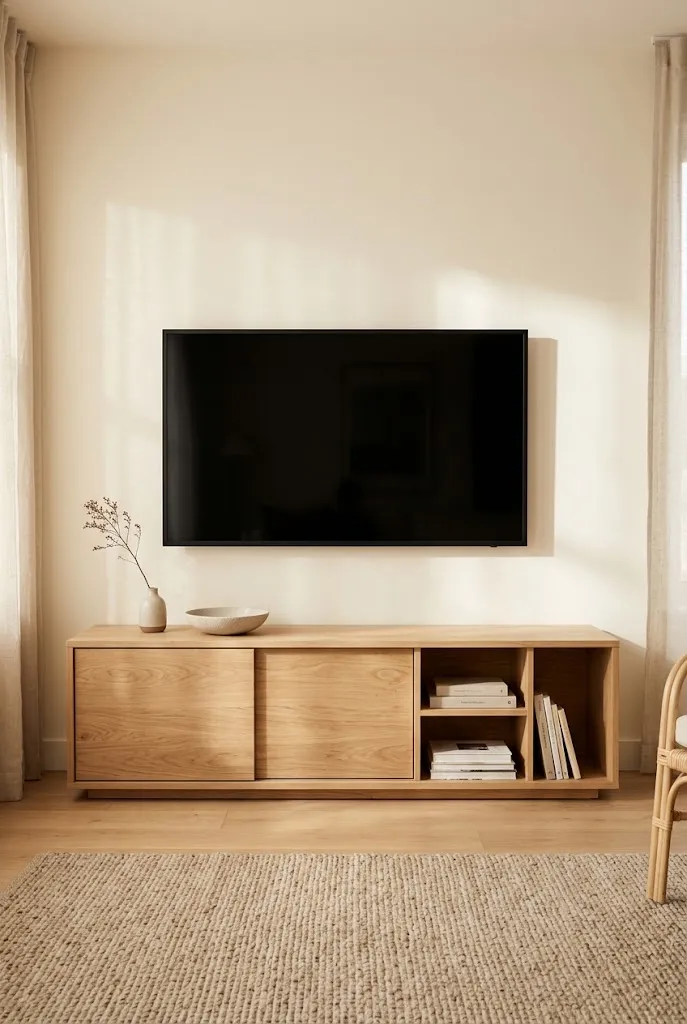
A long cabinet grounds the television and gives the wall a stronger horizontal line. Choose a unit wider than the screen, with closed storage for remotes, game controllers, and cables. Open cubbies can hold books or baskets, but leave enough ventilation around electronics.
Before buying, measure the wall and check the cabinet height from the sofa. A low profile keeps the television at a comfortable viewing level and leaves the wall above less crowded. This setup also works well in family rooms where everyday items need a hidden home.
## **Deep Accent Wall**
– **Pick a color that relates to the room.** Repeat it in a cushion, rug, or nearby artwork.
– Use a matte finish to reduce reflections around the screen.
– Paint the full wall for a cohesive backdrop.
– Keep console decor light so the darker color stays visible.
A deep wall color can help the black screen feel less separate from the room. Test a paint sample at different times of day, since changing light can shift how the shade reads. If the wall faces a window, check for glare before choosing a finish.
## **Layered Picture Ledge**
Image Description: A narrow oak picture ledge runs beneath a wall-mounted television, holding overlapping framed prints in black, cream, and pale wood frames. Add a small sculptural object at one end. Bright natural light, soft neutral wall, casual collected style, photographed straight on at eye level.
Quick Tip:
Choose a ledge with a front lip to keep frames from slipping. Layer two or three prints in different sizes, but leave enough space around the television for a clear visual boundary.
A picture ledge makes it easy to update the wall without rehanging every frame. Lean prints rather than filling the ledge with small objects, and secure the shelf according to its weight rating. Keep the display below or beside the screen so it does not interfere with viewing.
## **Fireplace Surround Styling**
**BEFORE:** A television above a fireplace can make the whole wall feel top-heavy, especially if the mantel is bare.
**AFTER:** A few low, balanced mantel objects connect the screen to the fireplace and soften the empty space below it.
Keep decor low enough that it does not block the screen or sit near heat. Check the fireplace and television manufacturers’ clearance guidance before placing a TV above an active fireplace. A simple mantel arrangement works best when objects vary in height but stay visually restrained.
Concealed Cable Covers
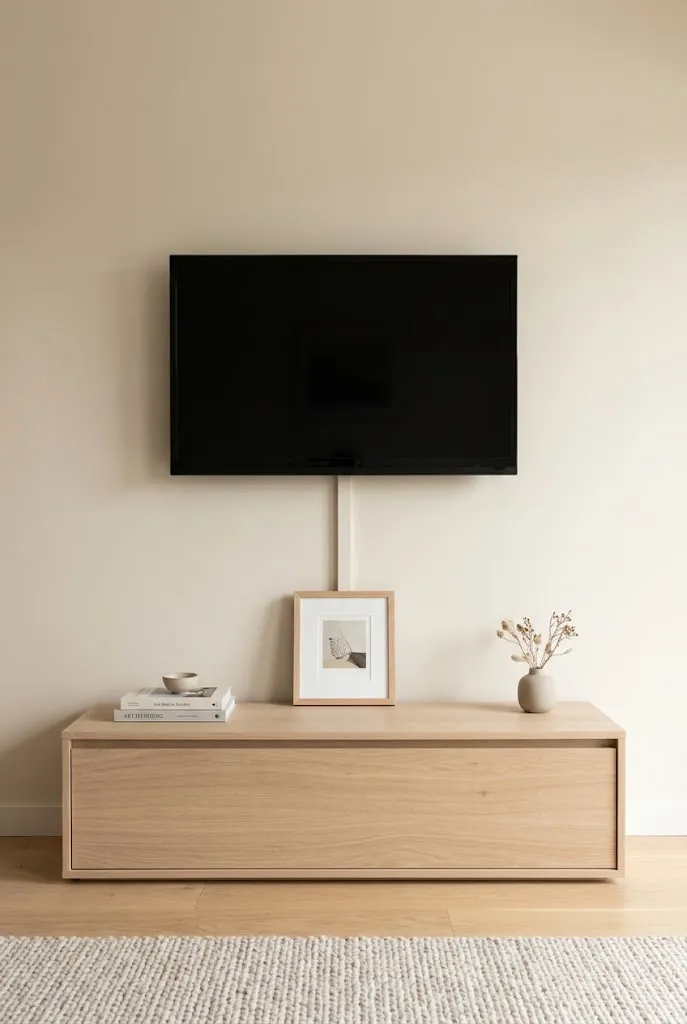
- Map the cord path. Choose the shortest route from the screen to the outlet.
- Measure the cable cover and cut it to fit.
- Attach the cover using the manufacturer’s recommended method.
- Paint it to match the wall after checking the finish instructions.
A cable cover creates a cleaner look without opening the wall. Keep power cords and signal cables arranged as the product allows, and do not run them through walls unless the cable is rated for that use. If you are unsure, ask a qualified installer.
Balanced Console Objects
| Detail | Option A: Symmetrical Styling | Option B: Asymmetrical Styling |
| Arrangement | Similar objects on both ends | Different objects balanced by visual weight |
| Feel | Formal and orderly | Relaxed and collected |
| Best for | Minimal rooms | Eclectic or layered rooms |
| Styling effort | Easy to repeat | Needs careful editing |
Balanced console styling helps the television wall feel finished without adding more pieces than the room needs. Start with one anchor object, then adjust the opposite side until the surface feels even. Keep the soundbar, vents, and device sensors clear so the setup remains functional.
Woven Texture Accents
DO:
- Add one woven basket for blankets or game controllers.
- Repeat the texture in a lamp shade or small tray.
- Keep the palette close to the room’s wood and fabric tones.
- Use open weave near electronics to support airflow.
DON’T:
- Place baskets where they block speakers or vents.
- Add woven pieces to every surface.
- Store warm devices inside closed baskets.
- Choose textures that snag on nearby upholstery.
Woven accents bring warmth to a TV area that may otherwise feel flat and sleek. Use them in practical places, such as a basket for throws or a tray for remotes. A couple of textured pieces are usually enough to soften the wall without making it busy.
## **Built-In Bookcases**

Best For: A wide wall with room for built-in storage
Result: The screen becomes part of a larger arrangement
Styling: Repeat a few colors across books and objects
Practical Note: Leave ventilation space around electronics
Bookcases on both sides of a television create a balanced wall and add storage for books, baskets, or decor. Vary object heights, but avoid filling every shelf. Keep the shelves nearest the screen more lightly styled so the television remains easy to focus on.
## **Ambient Bias Lighting**
A soft light behind the screen can make the TV wall feel more intentional after sunset. Choose a warm white strip or adjustable lighting, then hide the source so only the glow is visible. In my experience, a gentle halo looks calmer than bright colored lights in a neutral living room.
Check the product instructions before attaching lighting to the television, and keep vents clear. Set the brightness low enough that it does not compete with the picture. A dimmer or remote makes it easier to adjust the glow for movies, daytime viewing, or conversation.
## **Large Art Pair**
– **Choose art with colors already in the room.** Repeat a shade from the rug or cushions.
– Use frames of the same finish to connect the pair.
– Hang both prints at a consistent height beside the screen.
– Leave a clear gap between the frames and television.
– Select larger pieces for a wide wall so they do not look lost.
A pair of substantial prints can balance the screen without creating a crowded gallery wall. Use simple artwork with a limited palette, then repeat one of its colors in nearby textiles. Before hanging, mark the placement with paper templates and view the arrangement from the sofa.
Painted Arch Backdrop
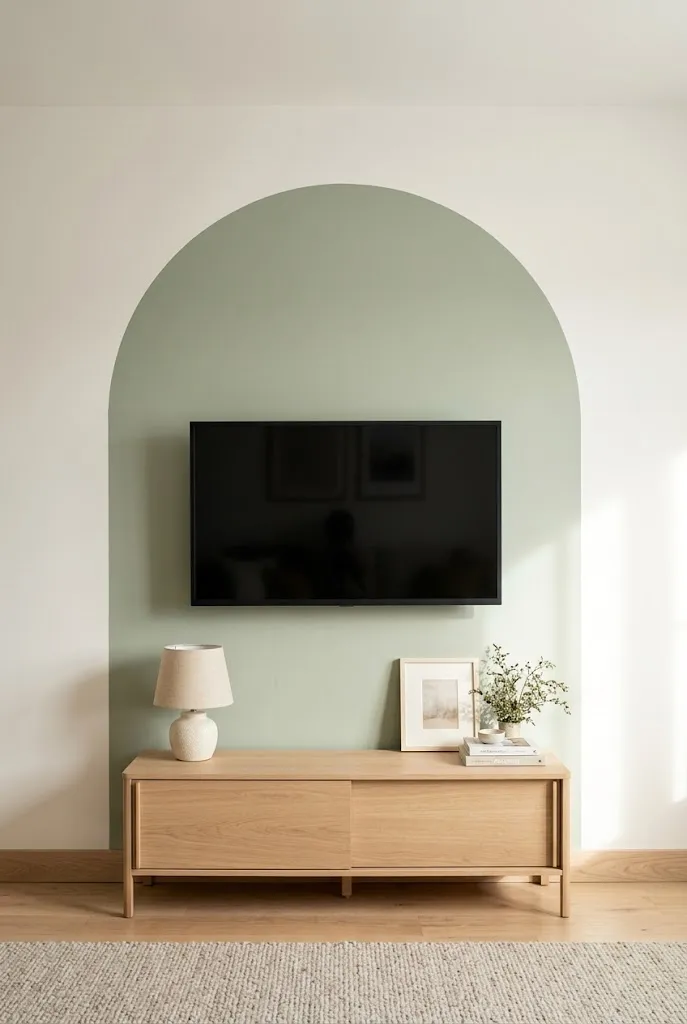
Quick Tip:
Trace a broad arch that extends beyond the television, then test the color in daylight before painting. Use painter’s tape and a measured center line to keep the shape balanced.
A painted arch gives the screen a defined zone without adding shelves or bulky furniture. Choose a muted shade that appears elsewhere in the room, such as a cushion or rug. Keep the arch wider than the TV so the screen does not feel squeezed inside it.
Hidden TV Cabinet
BEFORE: Devices, remotes, and loose cords can make the television wall feel cluttered. Open storage may expose every small item.
AFTER: A cabinet with doors hides the extras while keeping the screen and a few chosen accents visible.
Measure the devices before choosing a cabinet, and check the unit’s ventilation guidance. Leave access for cables and controllers, and avoid sealing heat-producing equipment in an unventilated compartment. Simple doors create a calmer look while keeping everyday electronics close at hand.
Seasonal Console Styling
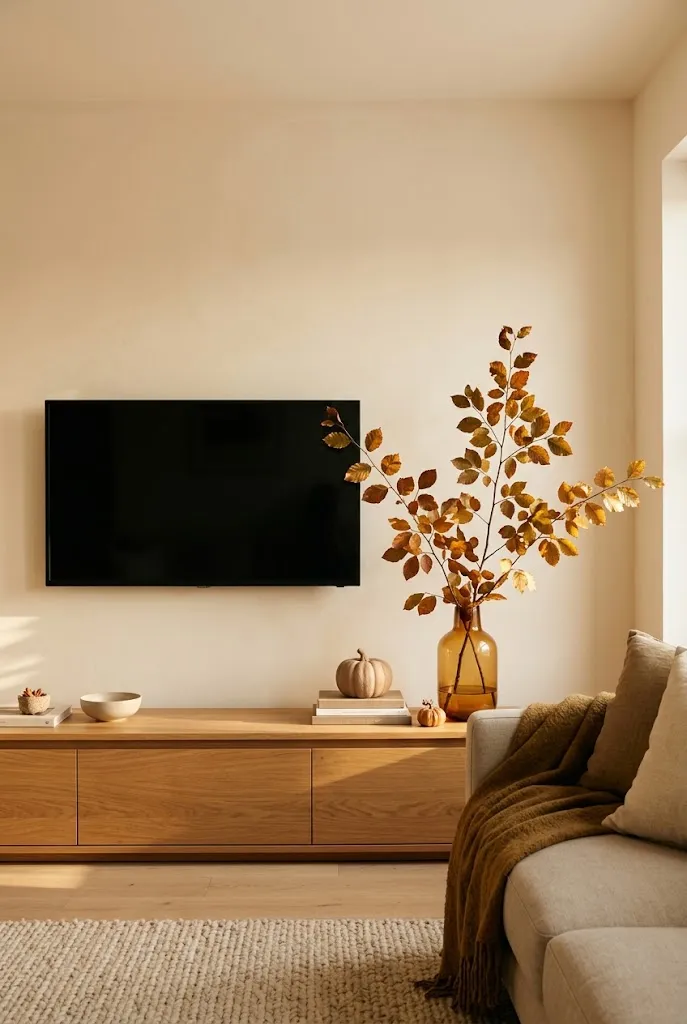
- Start with the usual console layout. Keep devices and remotes in their everyday places.
- Swap in one or two seasonal objects, such as a vase or small sculptural piece.
- Repeat a seasonal color in a book cover or nearby cushion.
- Remove items that block vents, sensors, or the screen’s lower edge.
A small seasonal change keeps the TV wall feeling fresh without requiring a full room reset. Use objects that fit the console scale, and store the everyday accents together so they are easy to bring back later. Keep seasonal decor away from hot electronics.
Sculptural Floor Lamp
| Detail | Option A: Arc Lamp | Option B: Slim Floor Lamp |
| Shape | Curved arm reaches over seating | Vertical profile sits beside the console |
| Footprint | Base may need more floor space | Narrow base suits tight corners |
| Light direction | Can shine toward a chair | Usually lights one nearby area |
| Best for | A seating nook near the screen | Balancing a tall TV wall |
A floor lamp adds height beside a wide television wall and brings useful light to nearby seating. Pick a style that echoes the room’s metal or wood finishes. Check that the base will not block a walkway, and position the shade to avoid screen glare.
Decorative Storage Basket
DO:
- Use the basket to soften a hard-edged TV wall. Choose a weave that matches nearby textures.
- Store throws or a few living room accessories inside.
- Place it beside the console, clear of the walking path.
- Add a small tray inside for remotes or controllers.
DON’T:
- Store warm electronics in a closed basket.
- Use a basket so large that it crowds the console.
- Let blankets spill into the walkway.
- Place it where it blocks a speaker or air vent.
A basket adds texture while giving loose items a defined place. Choose an open weave for throws and linens, and keep electronics in ventilated storage designed for them. A compact basket beside the cabinet is enough to balance the TV wall without making the floor feel busy.
Conclusion
A balanced TV wall can feel polished while still working for everyday movie nights, relaxing, and hosting friends. Choose details that suit your room, then leave enough space for comfortable viewing and easy access to electronics. Start with one change, such as adding a plant, arranging console decor, or hiding visible cables. Save this list on Pinterest so you can revisit your favorite ideas as you plan. Try a setup that fits your home, and share the article with someone refreshing their living room. A few practical touches can make the whole space feel more considered.



3 Comments